
Ambassadors first, security second
By Brian Uridge, CTM, CHPA, CPP, MPA
My entire law enforcement career was spent serving as a police officer in the Kalamazoo (MI) Department of Public Safety. After many decades of service, I retired as assistant chief. My police work was a true privilege from start to finish, and yet I spent the early years of my career focused on the wrong priorities. It took me 10 years to realize it.
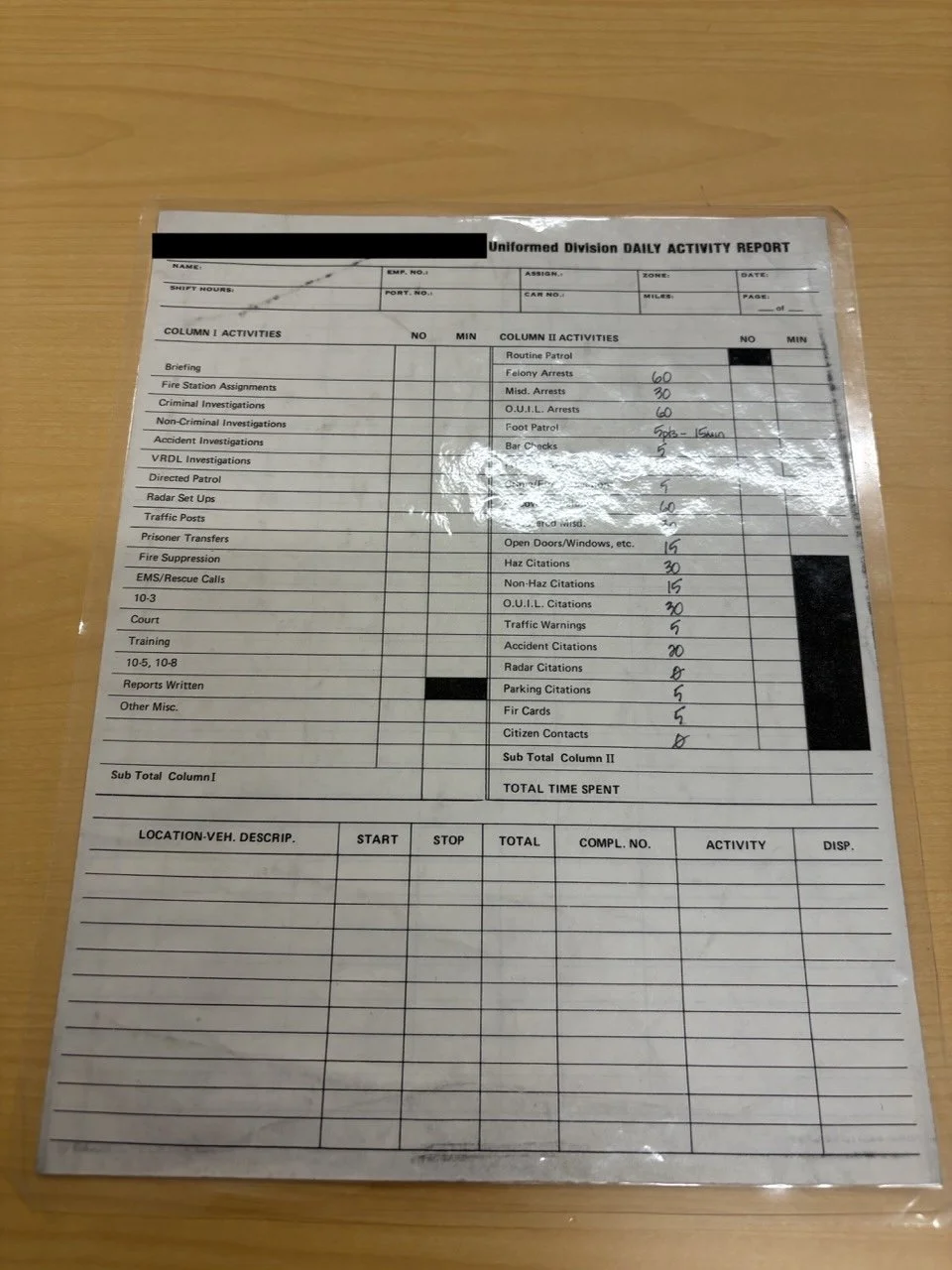
When I first started, every officer had to fill out a daily activity report, or DAR, to account for how you spent your 12-hour shift. My training officer said, “We don’t have a point system anymore. But if you just follow the point system in your head, you’ll be a great cop.”
My training officer hand-wrote the numbers of the old points system into my DAR (as you can see in the photo). I kept it with me every day of my career, and that guided my activities from day to day. Felony arrests or O.U.I.L. arrests were the high point-earners with 60 points apiece. Issuing citations was worth 30 points. Making contact with a citizen? Zero points. The activities I was expected to prioritize were crystal clear.
We used to require 15 minutes of foot patrol each day (which was worth only five points). But rather than seeing our presence as reassuring, we got calls assuming there was a problem in the neighborhood. This spoke volumes. We were prioritizing enforcement, but neglecting relationship-building.
15 years into my career, I attended a neighborhood meeting about drug problems in the neighborhood. The leaders of the neighborhood who organized the meeting spoke with me afterward. They acknowledged that they knew our public safety department couldn’t do it all, but that they wanted to be able to trust that we were working toward the same goal and that we cared about the well-being of the people in their neighborhood.
This was my “aha” moment. For too long, our department was not incentivizing creating an exceptional experience for the community we served. When someone calls 911, it is their worst day. It was our job to help them navigate it. I recognized the need for a non-traditional approach, where a compassionate, customer service mindset serves as the foundation of all we do. When we focus first on customer service, enforcement takes care of itself.
After I retired from the police department, I started my career in healthcare security and brought this approach with me. The number one patient need is assurance.[1] We as security professionals are an essential part of meeting that need. We are ambassadors first, and security personnel second. Our primary focus should be building relationships and reducing the anxiety of patients, staff, and visitors.
Creating positive customer service experiences plays an important role in organizational growth. According to the Beryl Institute's Consumer Perspectives on Patient Experience study, 72 percent of consumers report that recommendations from family and friends are an important factor in their healthcare decisions, underscoring the powerful influence that personal experiences have on an organization's reputation and patient choice. Building relationships leads to healthy growth.
One simple way to build relationships is by walking people to their destination and talking to them along the way. While it is certainly helpful to point people in the right direction when they arrive in our facility, great customer service goes the extra mile and ensures they get to where they’re going safely. Outstanding customer service builds relationships and engages with the people we are here to serve.
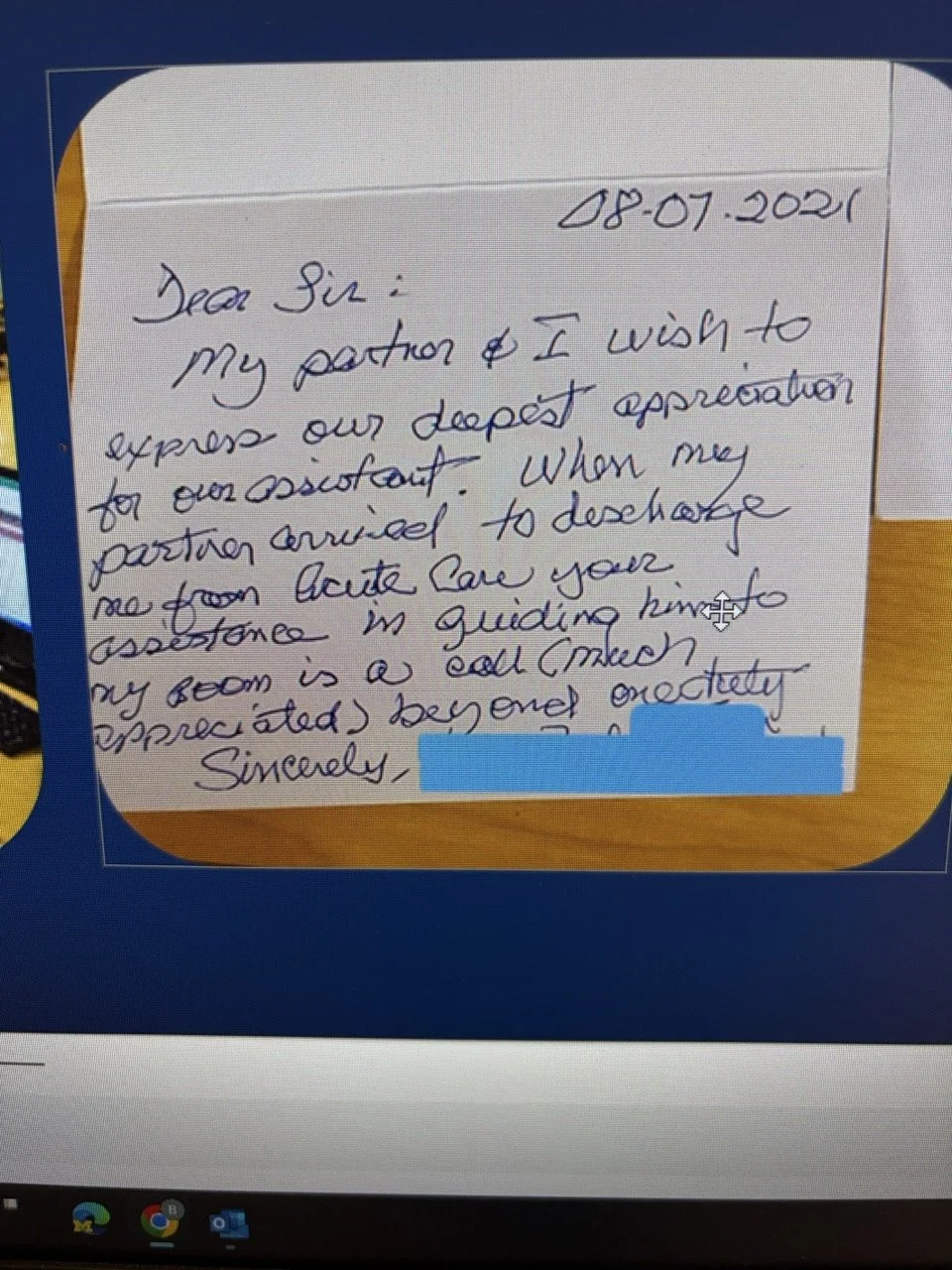
We instruct our teams to do this every opportunity they get because it is not only simple but powerful. In fact, several years ago I received a thank you note from a patient who we walked and talked with until she reached her destination, sharing how much that kind act meant to her. I keep it in my office to this day.
In my office I also have the DAR sheet I received when I was a new police officer. I’ve kept it with me every day of my career. While well-intentioned, the points system is not focused on our real job. Tickets, arrests, safety—these are all important components of public safety, but there needs to be a balance. Compassionate human interaction is crucial. It is at the core of all we do. We must incentivize creating a positive experience for the people we serve.
Sources:
[1] Lee, F. “If Disney Ran Your Hospital: 9½ Things You Would Do Differently” (2004, Second River Healthcare Press).