
AI is a powerful tool for security personnel, not a replacement
By Brian Uridge, CTM, CHPA, CPP, MPA
Creating environments that are safe and feel safe requires highly trained and compassionate security personnel. In short, helping people experience safety is a job for human beings. And yet, AI can have a tremendous impact on these professionals’ ability to do their jobs effectively and efficiently and promote the safety of every person in the hospital environment.
One of the most common objections to the increased use of artificial intelligence (AI) in healthcare organizations is that it will eliminate people’s jobs. When it comes to security teams in these organizations, AI is being used not to replace security personnel, but to provide earlier threat detection, faster response capabilities, better intelligence, and more proactive workplace violence prevention strategies.
Here are a few ways healthcare security personnel are deploying AI solutions to make people safer.
Detecting potential threats and analyzing risk
Behavior Recognition and Threat Detection: AI can analyze behaviors such as pacing, aggressive movements, stalking, unauthorized loitering, and escalation indicators that may precede violence.
Workplace Violence Prevention: AI platforms can aggregate reports, incident data, behavioral indicators, and threat assessment information to help identify individuals who may pose a risk of violence.
Predictive Risk Analysis: By analyzing historical incident reports, staffing levels, patient volumes, and environmental factors, AI can help predict when and where security incidents are most likely to occur.
Visitor Management and Screening: AI can assist with visitor screening, watchlist matching, identification verification, and flagging individuals with prior violent incidents or restrictions.
Enhancing environmental safety
Weapons Detection Analytics: Health systems are deploying AI-powered video analytics to identify firearms, long guns, and other weapons entering facilities, allowing security teams to intervene before an incident escalates.
Access Control Intelligence: AI enhances badge access systems by detecting anomalies such as credential sharing, tailgating, unauthorized access attempts, and unusual movement patterns.
Duress and Staff Safety Integration: AI can correlate mobile duress alarms, location data, camera feeds, and access control information to provide responders with real-time situational awareness during emergencies.
Perimeter and Parking Structure Security: AI analytics can detect trespassing, suspicious vehicles, unattended packages, and unusual after-hours activity across large healthcare campuses.
Freeing humans to do what only humans can do
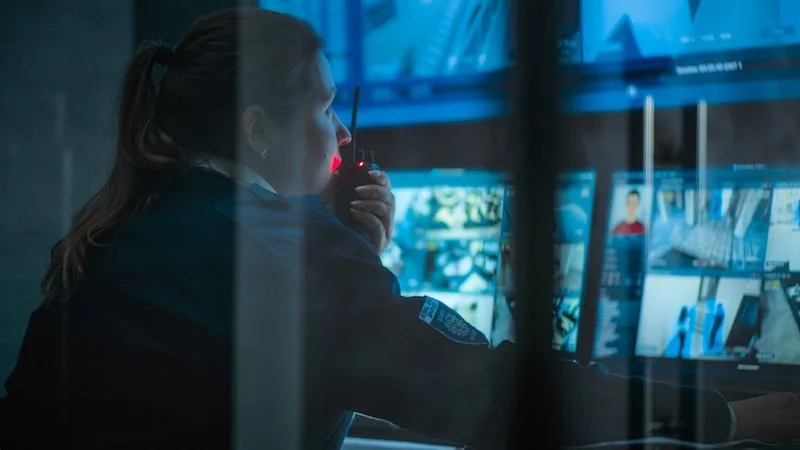
Real-Time Camera Monitoring: Instead of expecting staff to watch hundreds of cameras simultaneously, AI continuously monitors video feeds and alerts security personnel only when suspicious activity is detected. This moves these highly trained individuals from behind a screen and allows them to be a visible, physical presence that promotes feelings of safety for patients, staff, and visitors.
Operational Efficiency and Resource Deployment: AI-driven dashboards help security leaders identify trends, allocate officers more effectively, prioritize high-risk areas, and measure the effectiveness of violence prevention initiatives. AI cannot make decisions about what course of action is best in a given situation—that’s the job of security personnel—but it can give them the best data possible to help them determine what will be most effective.